Emergent AI Review (2026): Features, Pricing, Pros, Cons, and Alternatives
Published October 29, 2026
Building an application involves more than writing code. You also need to configure databases, test functionality, and prepare the software for deployment. Emergent AI aims to simplify this process by letting you describe an application in plain English while its AI agents handle much of the development work.
But can it build applications that are ready for real-world use, or is it better suited to prototypes and early-stage projects?
This Emergent AI review covers the platform's features, pricing, free-plan limits, strengths, weaknesses, and alternatives. You'll also learn what to check before putting an AI-generated application in front of customers.
What Is Emergent AI?
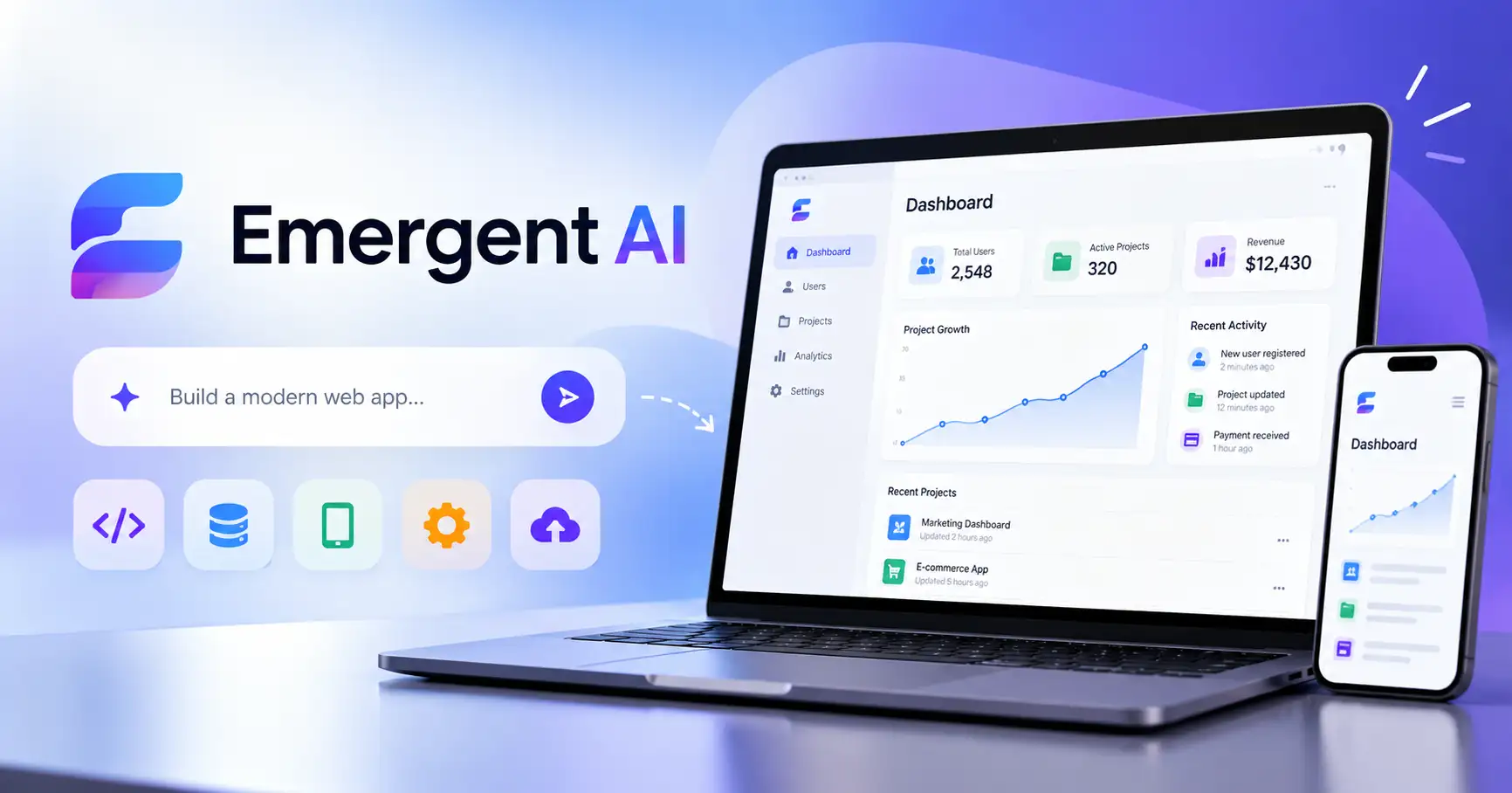
Emergent AI is an AI-powered application development platform that turns natural-language instructions into software. Rather than building every component manually, you describe your requirements, review the generated application, and request changes through a conversational interface.
According to its official documentation, Emergent's AI agents can generate code, configure databases and APIs, test applications, and assist with publishing.
The platform can help you explore several types of projects, including:
Business dashboards and internal tools.
SaaS products and customer portals.
E-commerce websites and web applications.
Mobile applications for Android and iOS.
Prototypes for testing business ideas.
For example, a small marketing agency might want a lead-management dashboard with a contact form, customer records, lead statuses, and monthly reports. Emergent can help generate an initial version without requiring the user to write every line of code.
That said, getting an application to run is only the first step. Security, reliability, and production readiness still need careful attention.
How Does Emergent AI Work?
Emergent uses a conversational workflow to guide application development. You describe what you want, review the result, and refine it until it meets your requirements.
The process typically involves four steps:
Define the requirements. Explain the problem, intended users, essential features, and expected behavior.
Generate the application. Let the platform's agents create the code and configure the required components.
Review and refine. Test the preview, identify missing functionality, and request specific changes.
Prepare for deployment. Check integrations, permissions, error handling, and performance before publishing.
A well-defined prompt makes a difference. For instance:
"Build a responsive lead-management dashboard for a small marketing agency. Include login, a lead submission form, a searchable lead table, status filters, and monthly reporting. Validate form inputs and prevent unauthorized access to customer records."
This gives the AI a clearer brief than a generic request to build a business application.
For larger projects, work in stages. Get the core workflow right first, then add reporting, integrations, and other features. It's easier to identify problems when you make changes incrementally.
Emergent AI Features
Emergent's official materials describe several capabilities designed to support application development.
Full-stack application development
Emergent supports workflows for generating front-end interfaces and back-end functionality. Depending on the project, these can include database configuration, authentication, APIs, and application logic.
This can help entrepreneurs test a product idea before investing in a full development team. Developers can also use the platform to establish an initial implementation before refining the code.
Mobile app development
Emergent documents native mobile development using React Native and Expo, with workflows for Android builds and iOS testing and submission.
Native mobile development involves more than making a website fit a smaller screen. Device compatibility, permissions, app-store requirements, and testing on actual devices still matter.
Integrations and code access
The platform supports integration workflows and GitHub connectivity on eligible plans. These options can help developers manage version history and work with generated code outside the conversational interface.
Before subscribing, check whether your required integrations, repository workflow, and deployment options are supported by the plan you're considering.
AI-assisted testing and deployment
Emergent can assist with testing, debugging, and publishing applications, reducing some of the manual setup involved in development.
However, AI-assisted checks aren't a substitute for independent testing. Before launching, verify authentication, database permissions, form validation, API failure handling, mobile responsiveness, and recovery from errors.
Emergent AI Pricing: Is There a Free Plan?
Emergent offers a free tier alongside paid plans that use a credit-based system. Its official pricing page lists the following individual plans.
Prices and allowances were checked against Emergent's official pricing information on October 29, 2026. Standard and Pro prices reflect the annual-billing basis advertised by Emergent. Check the current checkout terms before subscribing.
The free tier provides a starting point for exploring the platform and building small projects. However, publishing restrictions apply, and some deployment options require paid usage or additional credits.
Standard is aimed at individual builders and smaller projects. Pro offers additional capabilities for more demanding development workflows, including advanced agent controls and priority support.
Understand credit consumption before paying
Credits cover tasks such as code generation, modifications, testing, and deployment. Usage depends on the work involved, so adding a complex feature can consume considerably more credits than making a minor interface change.
Deployment can also affect your costs. Consult Emergent's official plans and credits guide for current information about hosting allowances, credit top-ups, and expiry rules.
A practical approach: Start with the free tier and build a small test project. Track the credits used for the initial build, debugging, and subsequent changes. This gives you a more realistic estimate of development costs than looking at subscription prices alone.
Emergent AI Pros and Cons
Pros
Accessible development: Natural-language prompts help non-developers explore software ideas.
Support across development stages: Emergent can assist with code generation, testing, integrations, and publishing.
Faster prototyping workflows: Founders can develop an initial product version before committing to a larger engineering project.
Mobile development support: Documented React Native and Expo workflows extend beyond web applications.
Developer workflow options: GitHub integration on eligible plans supports version control and code management.
Cons
Unpredictable credit needs: Repeated changes, debugging, and deployment can increase usage.
Code still needs review: Generated applications may contain logic errors, security weaknesses, or incomplete functionality.
Complex projects require oversight: Larger applications need architectural decisions, ongoing maintenance, monitoring, and thorough testing.
Plan restrictions vary: Free access, publishing options, and advanced capabilities aren't identical across plans.
The key consideration is what happens after the first version is generated. An application may look polished in a preview but reveal problems when multiple users, real data, or unexpected inputs enter the picture.
Emergent AI Alternatives: Which Tool Should You Choose?
Emergent is one of several platforms that use AI to help people build applications. The right alternative depends on how much control you need and how you prefer to work.
Emergent AI vs. Lovable
Lovable is worth considering if you want to build and refine web applications using natural-language instructions. Its official pricing page explains its credit system and hosting-related allowances.
To compare Lovable with Emergent, give both tools the same requirements. Pay particular attention to authentication, database behavior, external integrations, and the cost of deploying the finished application.
Emergent AI vs. Replit
Replit combines AI-assisted development with a broader online coding environment. It may suit developers who want to work more directly with code alongside AI assistance.
Emergent is worth evaluating if you prefer an agent-led, conversational approach to building applications. Your choice will depend on how much control you want over the underlying implementation.
Emergent AI vs. Bolt
Bolt offers another browser-based approach to building applications through prompts. When comparing it with Emergent, check how each platform handles your preferred framework, debugging, integrations, and publishing requirements.
For all three alternatives, confirm current pricing and plan limits on the official websites before making a decision.
You can also explore Allaipedia's guide to AI app development tools for a broader overview of the available options.
Who Should Use Emergent AI?
Emergent may be a good fit for several types of users:
Entrepreneurs who want to test an early product idea.
Small businesses that need prototypes of internal dashboards, customer portals, or operational tools.
Developers looking to accelerate initial implementation and repetitive coding tasks.
Product teams that want to turn requirements into a working prototype before committing to a larger build.
It may be less suitable for projects that demand extensive custom architecture, strict regulatory controls, complex integrations, or guaranteed performance without experienced technical oversight.
Before choosing an AI app builder, consider your budget, technical requirements, maintenance responsibilities, and ability to review the generated application. Allaipedia's guide to choosing the right AI tool for your business offers a broader framework for evaluating your options.
FAQ’s
Is Emergent AI free to use?
Yes. Emergent offers a free tier with limited credits for exploring and building applications. Publishing and advanced capabilities may require a paid plan or additional credits. Check the current official terms before starting a project.
Can Emergent AI build production-ready applications?
Emergent can help create and publish applications, but production readiness depends on the implementation and testing. Review security, permissions, error handling, performance, and data protection before using an application with real customers.
Does Emergent AI require coding skills?
No. Emergent is designed around natural-language development, so beginners can describe an application without writing code manually. Technical knowledge is still valuable when debugging, reviewing generated code, or maintaining complex projects.
What is the best Emergent AI alternative?
There isn't one option that suits every project. Lovable is worth considering for prompt-driven web development, Replit for a broader AI-assisted coding environment, and Bolt for browser-based application creation. Test the tools against your actual requirements before subscribing.
Conclusion
Emergent AI is worth considering if you want to turn an idea into a working web or mobile application without managing every development step yourself. Its conversational workflow can help entrepreneurs, small businesses, and developers get an initial version off the ground.
The main trade-offs are credit consumption, plan restrictions, and the need for human testing. An application that runs successfully isn't necessarily ready for production.
Start with a small project, track the credits needed to build and refine it, and check whether the finished application can be maintained and deployed in a way that meets your requirements. If the workflow suits your project and budget, Emergent could be a practical addition to your development toolkit.